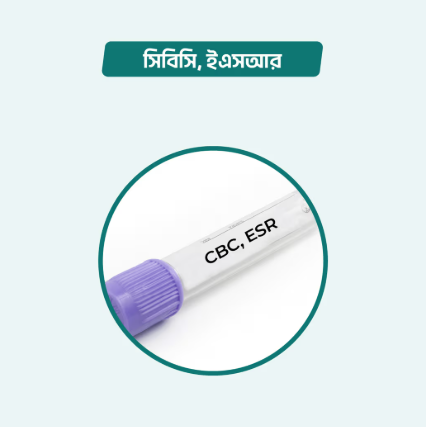


Helps detect:
Anemia (low RBC/Hb).
Infections (elevated WBC count).
Platelet abnormalities (risk of bleeding or clotting).
Leukemia or other bone marrow issues.
Used to evaluate:
Chronic inflammation (e.g., arthritis, lupus).
Infections.
Cancers.
Autoimmune conditions.
Ranges
1. Complete Blood Count (CBC):
RBC: 4.7–6.1 million/μL (men), 4.2–5.4 million/μL (women).
WBC: 4,500–11,000/μL.
Hemoglobin (Hb): 13.8–17.2 g/dL (men), 12.1–15.1 g/dL (women).
Hematocrit (HCT): 40.7%–50.3% (men), 36.1%–44.3% (women).
Platelets: 150,000–450,000/μL.
2. Erythrocyte Sedimentation Rate (ESR):
Men: 0–15 mm/hr.
Women: 0–20 mm/hr.
Children: 0–10 mm/hr.
Low RBC, Hb, HCT: Anemia or blood loss.
High RBC, Hb, HCT: Dehydration, polycythemia.
High WBC: Infection, inflammation, leukemia.
Low WBC: Immune suppression or marrow issues.
Low Platelets: Risk of bleeding.
High Platelets: Inflammatory disorders or clotting risks.
Elevated ESR: Indicates inflammation, infection, or autoimmune diseases.
Normal or Low ESR: Likely no significant inflammation.
Sample types
Whole Blood: Collected in a black-top or lavender-top tube.